
Vietnam’s Real Estate Market Enters a New Development Phase
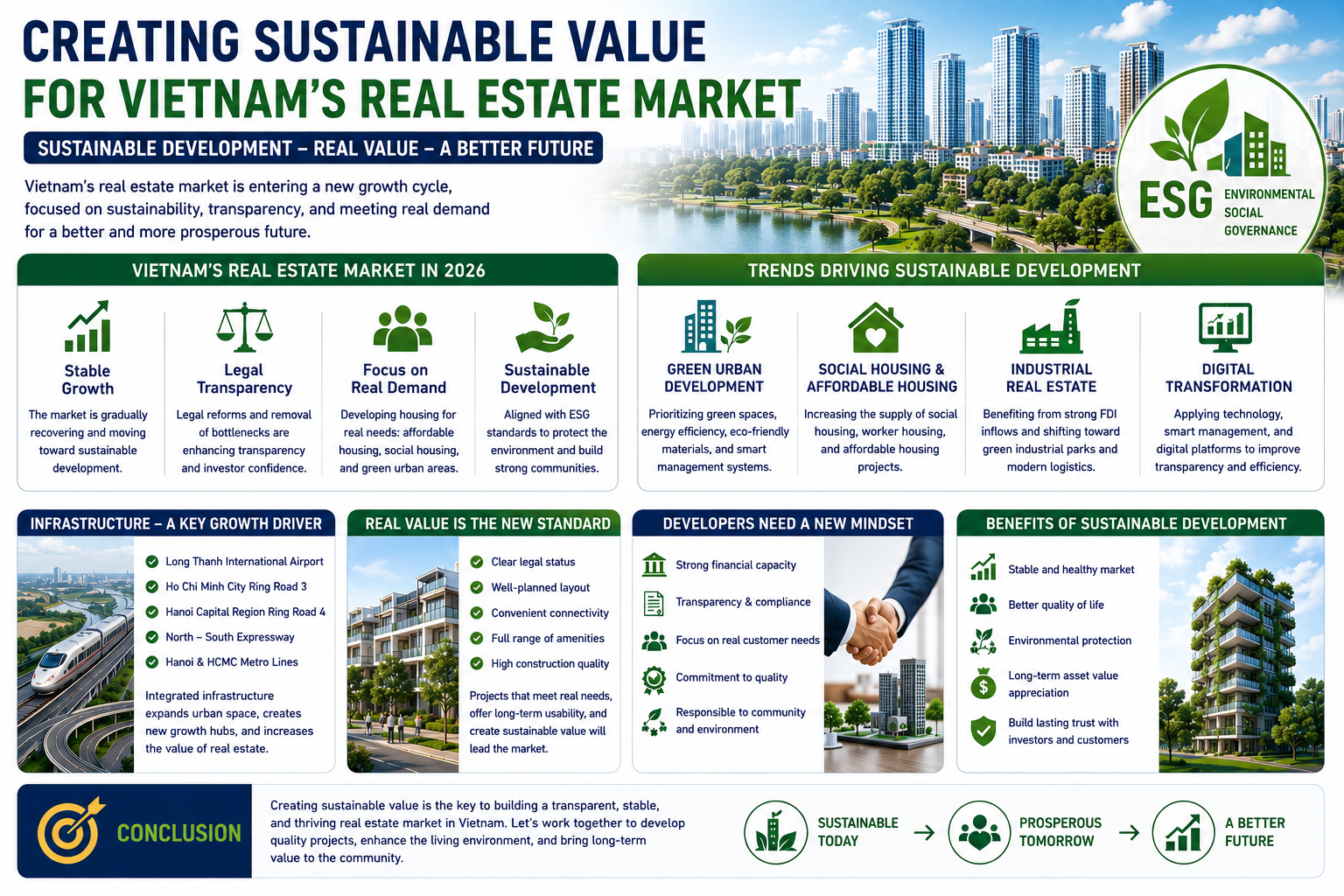
After a prolonged period of market fluctuations, Vietnam’s real estate sector is gradually entering a new growth cycle focused not on short-term speculation but on sustainability, transparency, and meeting genuine housing demand.
The year 2026 is considered a pivotal milestone as legal reforms, infrastructure investments, and green urban development strategies create a solid foundation for market recovery. Instead of pursuing growth at any cost, real estate developers are increasingly adapting to new standards related to environmental protection, corporate governance, digital transformation, and product quality.
Real Value Becomes the New Benchmark
According to industry experts, Vietnam’s property market is undergoing a significant transformation in which projects with transparent legal status, well-developed infrastructure, and strong end-user demand are gaining a competitive advantage.
Unlike previous cycles driven largely by speculative investment, buyers and investors today are paying greater attention to practical usability, long-term income potential, and sustainable asset appreciation.
Integrated urban developments featuring modern transportation networks, green spaces, and comprehensive amenities are becoming preferred choices for both homeowners and long-term investors.
Green Urban Development Is Becoming an Essential Trend
One of the most notable trends in Vietnam’s real estate market is the growing emphasis on green and environmentally friendly urban development.
As concerns over climate change and sustainable growth continue to rise, many developers are shifting toward:
- Eco-urban developments.
- Green residential communities.
- Energy-efficient buildings.
- Smart cities.
- ESG-compliant projects.
Increasing green spaces, using environmentally friendly materials, implementing smart management systems, and optimizing energy consumption not only improve quality of life but also enhance long-term property values.
Social Housing and Affordable Housing Play a Critical Role
A sustainable real estate market requires balanced development across all housing segments.
For many years, major cities have experienced shortages of affordable and mid-range housing, making homeownership increasingly difficult for average-income families.
In 2026, the development of social housing, worker housing, and reasonably priced commercial housing has become a key priority for both local governments and developers.
These projects not only contribute to social welfare but also help create a healthier and more stable real estate market.
Infrastructure Development Drives Long-Term Growth
Infrastructure continues to be one of the most important factors supporting sustainable real estate growth.
Several major projects are currently being implemented across Vietnam, including:
- Long Thanh International Airport.
- Ho Chi Minh City Ring Road 3.
- Hanoi Capital Region Ring Road 4.
- North-South Expressway.
- Metro systems in Hanoi and Ho Chi Minh City.
These projects improve regional connectivity, expand urban development space, and create new economic growth centers, thereby increasing the value and attractiveness of surrounding real estate markets.
Industrial Real Estate Remains a Bright Spot
Alongside residential property, industrial real estate continues to be one of Vietnam’s strongest-performing sectors thanks to rising foreign direct investment (FDI).
Vietnam is benefiting significantly from global supply chain diversification, leading to increasing demand for industrial land, logistics centers, warehouses, and manufacturing facilities.
Modern industrial parks are no longer focused solely on land leasing. They are increasingly evolving into:
- Green industrial parks.
- Eco-industrial zones.
- Innovation hubs.
- High-tech manufacturing centers.
- Integrated industrial ecosystems.
These developments are expected to play a major role in driving economic growth and enhancing property values in the coming years.
Digital Transformation Enhances Transparency
Another key factor in creating sustainable value is digital transformation.
Many real estate companies are investing heavily in:
- Customer relationship management platforms.
- Smart property management systems.
- Online transaction platforms.
- Digital market databases.
- Artificial intelligence applications.
Technology adoption improves operational efficiency, enhances transparency, reduces risks, and delivers a better customer experience.
Digital transformation is becoming an essential component of the future real estate industry.
Developers Must Embrace a New Mindset
The current market environment no longer supports business models that rely heavily on financial leverage or short-term gains.
Developers that succeed in the next phase of market growth will be those that demonstrate:
- Strong financial capacity.
- Legal transparency.
- Customer-centric strategies.
- High-quality products.
- Commitment to environmental and social responsibility.
This shift will contribute to a healthier market while strengthening trust among investors, buyers, and stakeholders.
Building a More Sustainable Real Estate Future
Experts believe Vietnam’s real estate market still possesses enormous growth potential thanks to rapid urbanization, a young population, and strong housing demand.
However, future growth will increasingly be driven by real value rather than speculative price surges.
Infrastructure quality, project standards, environmental sustainability, and the ability to meet social needs will become the key factors determining long-term success.
Creating sustainable value is not only a requirement for developers but also the foundation for building a transparent, stable, and resilient real estate market.
Conclusion
Vietnam’s real estate market is entering an important period of transformation. In a rapidly changing economic and social landscape, sustainability will become the defining factor of competitiveness for both developers and projects.
Developments focused on genuine demand, green urban planning, modern infrastructure, and technological innovation will serve as the foundation for long-term growth and sustainable prosperity in Vietnam’s real estate sector.
References:
Free access to exclusive information on warehouse, factory, and land rentals in Dong Nai, Binh Duong, Long An, Ho Chi Minh City, and more.
KHU CÔNG NGHIỆP 247 is a company operating in the field of buying, selling, and leasing factories and real estate.. We are proud to be a leading provider of real estate services in Vietnam. We have a team of highly qualified and experienced real estate consultants who always place trust and credibility at the core of everything we do.
Phone: 0901 490 348
Email: datkhucongnghiep247@gmail.com
Website: datkhucongnghiep247.com.vn