
Real Estate Taxes Become a Tool to Control Speculation
As property prices continue to rise in many regions, policymakers are increasingly focusing on tax measures to curb real estate speculation, reduce short-term flipping, prevent artificial price surges, and guide the market toward greater transparency and sustainability.
Many experts believe that tightening real estate taxation not only helps control speculative activities but also regulates capital flows and improves housing affordability for people with genuine housing needs.
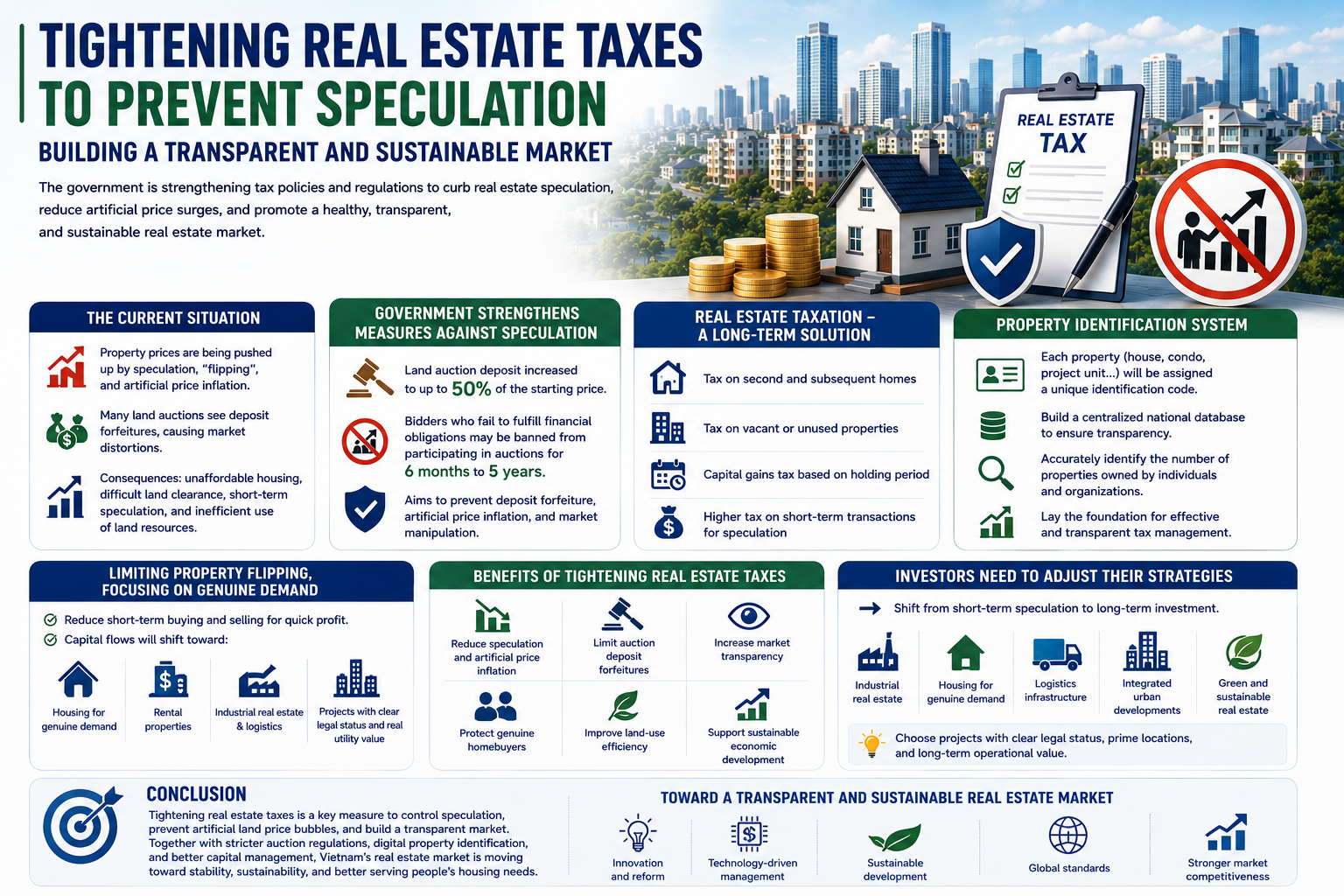
Speculation Continues to Push Property Prices Higher
In recent years, Vietnam’s real estate market has experienced several localized land price booms driven by speculation, land hoarding, and price manipulation.
In particular, some land auctions recorded unusually high winning bids followed by abandoned deposits, creating market distortions and driving land prices upward.
This situation has resulted in:
- Property prices exceeding the purchasing power of many households.
- Difficulties in land clearance and compensation activities.
- An increase in short-term speculative transactions.
- Inefficient utilization of land resources.
Government Strengthens Measures Against Real Estate Speculation
Since the beginning of 2026, several new policies have been introduced to control speculation and price manipulation in the real estate market.
One notable measure is the increase in land auction deposit requirements to as much as 50% of the starting price. Additionally, winning bidders who fail to fulfill their financial obligations may be banned from participating in future auctions for periods ranging from six months to five years, depending on the severity of the violation.
These regulations are expected to reduce auction deposit forfeitures, prevent artificial price inflation, and improve market stability.
Real Estate Taxation Viewed as a Long-Term Solution
In addition to tightening land auction regulations, many experts consider taxation to be a more effective long-term solution for controlling real estate speculation.
Several tax measures are currently being discussed, including:
- Taxes on second and subsequent homes.
- Taxes on vacant or unused properties.
- Capital gains taxes based on holding periods.
- Higher taxes on short-term property transactions intended for speculation.
Many countries have successfully implemented similar tax policies to stabilize housing markets and discourage speculative investment.
Property Identification Systems Support Transparent Tax Management
One of the most significant changes expected in Vietnam’s real estate sector is the implementation of a digital property identification system.
Under this system:
- Individual houses.
- Condominium units.
- Real estate products within development projects.
will receive unique identification codes within a national property database.
This centralized data system will allow authorities to accurately determine how many properties each individual or organization owns, creating a strong foundation for effective and transparent tax administration.
Limiting Property Flipping and Focusing on Genuine Demand
Experts believe that combining property databases with taxation policies will significantly reduce short-term speculative buying and selling activities.
As interest rates, financing costs, and market regulations become increasingly stringent, short-term property flipping is expected to become more difficult in the coming years.
Instead, investment capital is likely to shift toward:
- Residential housing serving genuine demand.
- Rental properties.
- Industrial real estate and logistics facilities.
- Projects with transparent legal status and real utility value.
Moving Toward a More Sustainable Real Estate Market
The purpose of tightening real estate taxes is not to discourage investment but to build a more transparent, stable, and sustainable market environment.
The new policies are expected to:
- Reduce speculation and artificial price inflation.
- Limit auction deposit forfeitures.
- Increase market transparency.
- Protect genuine homebuyers.
- Improve land-use efficiency.
- Support sustainable economic development.
These measures also represent an important step toward aligning Vietnam’s real estate market with international standards of modern market governance.
Investors Need to Adjust Their Strategies
As regulations continue to evolve, experts recommend that investors shift from short-term speculation toward long-term investment strategies.
The sectors expected to offer strong potential in the coming years include:
- Industrial real estate.
- Housing projects serving genuine demand.
- Logistics infrastructure.
- Integrated urban developments.
- Green and sustainable real estate.
Selecting projects with clear legal status, strategic locations, and long-term operational value will become increasingly important for investment success.
Conclusion
The tightening of real estate taxation is becoming a key policy tool for controlling speculation, preventing artificial land price bubbles, and promoting a more transparent property market. Combined with stricter auction regulations, digital property identification systems, and improved capital management, Vietnam’s real estate market is entering a new phase focused on stability, sustainability, and meeting the genuine housing needs of its citizens.
References:
Free access to exclusive information on warehouse, factory, and land rentals in Dong Nai, Binh Duong, Long An, Ho Chi Minh City, and more.
KHU CÔNG NGHIỆP 247 is a company operating in the field of buying, selling, and leasing factories and real estate.. We are proud to be a leading provider of real estate services in Vietnam. We have a team of highly qualified and experienced real estate consultants who always place trust and credibility at the core of everything we do.
Phone: 0901 490 348
Email: datkhucongnghiep247@gmail.com
Website: datkhucongnghiep247.com.vn