

The industrial parks market enters a “new standard” phase
The year 2026 marks a pivotal transition for Vietnam’s industrial parks, where competitive advantages are no longer defined by:
Low rental costs
Large land banks
But instead shift toward:
Infrastructure quality
Operational readiness
Sustainable development standards
ESG is no longer optional, but a mandatory requirement in the development of industrial parks.
👉 This reflects a fundamental shift in enterprise demand, particularly from the FDI sector.
Beyond cost considerations, investors are now evaluating long-term operational efficiency, compliance risks, and sustainability performance when selecting locations.
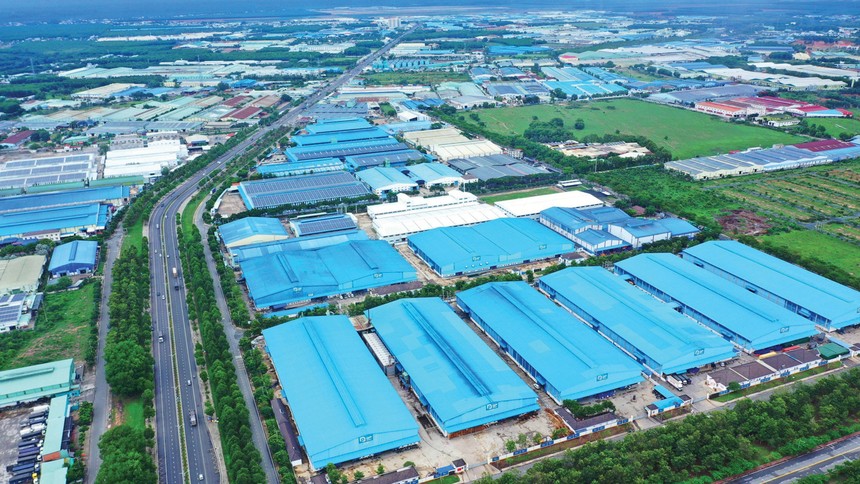
From “land leasing” to integrated industrial ecosystems
According to Ngô Thị Phương Thủy, businesses today no longer seek just production space but a full ecosystem that supports operations:
Legal services
Administrative support
Logistics
Partner connectivity
This signals a transition from a traditional landlord model to a service-oriented industrial platform.
A typical example is EcoHub – an integrated industrial ecosystem that enables:
👉 Businesses to focus on production instead of dealing with complex operational processes.
This model reduces friction in market entry and significantly shortens setup time for manufacturers.
Ready-built factories: A market-leading trend
The ready-built factory (RBF) model is becoming the preferred choice in Vietnam’s industrial parks.
According to Peter Ryder:
Core5 projects in Quảng Ninh and Hải Phòng have reached 100% occupancy
Hưng Yên has reached approximately 85%
👉 Key reasons:
Faster deployment
Lower upfront investment
Ideal for new market entrants
In addition, this model aligns well with global supply chain requirements, where speed and flexibility are critical.
Two dominant models: RBF & BTS
Developers are now focusing on two main strategies:
1. RBF (Ready Built Factory)
Pre-built factory units
Immediate operation capability
Suitable for SMEs and new FDI entrants
2. BTS (Build-To-Suit)
Custom-built facilities
Tailored technical specifications
Suitable for large corporations
👉 This combination allows the market to:
Increase flexibility
Optimize capital allocation
Serve diverse tenant needs
The “new standard” of industrial parks: ESG is mandatory
One of the most significant changes is the rise of ESG (Environmental, Social, Governance).
Previously:
ESG was a competitive advantage
Today:
ESG = a mandatory requirement
Global policy impact
From 2026, the European Union implements:
Carbon Border Adjustment Mechanism (CBAM)
👉 This requires:
Exporters to Europe must:
Reduce emissions
Choose ESG-compliant facilities
A “green passport” for FDI enterprises
According to Ngô Thị Phương Thủy:
👉 If facilities fail to meet ESG standards:
Businesses may lose competitive advantages
Or even be excluded from global supply chains
Therefore, modern industrial parks must provide:
Green infrastructure
Sustainable operations
Emission reduction solutions
Green technology in modern industrial parks
New developments are integrating multiple solutions:
Rooftop solar systems
Digital energy management platforms
Energy-efficient construction materials
Green spaces to reduce heat island effects
👉 Objectives:
Lower operating costs
Improve efficiency
Move toward Net Zero targets
Strategies of major developers
Indochina Capital
Applies LEED standards
Develops Core5 projects
Focuses on green factories
SLP Vietnam
Expands RBF & BTS models
Selective partnerships
Operational optimization
Vietnam-based industrial park developers
Prioritize quality over rapid expansion
Invest in international-standard infrastructure
Upgrade pressure: Opportunity for early movers
This transition is creating two distinct groups:
Losing group:
Older industrial parks
Non-ESG compliant
Weak infrastructure
Winning group:
Modern industrial parks
Long-term strategic vision
Early adoption of green standards
👉 The gap between these groups is expected to widen significantly.
Impact on Vietnam’s industrial real estate
1. Rent is no longer the decisive factor
👉 Tenants are willing to pay more for:
Better infrastructure
Faster operational readiness
International standards
2. Rising demand for high-quality factories
Particularly in:
Đồng Nai
Hải Phòng
Bình Dương
3. Vietnam emerges as a new manufacturing hub
Driven by:
Strategic location
Competitive cost structure
Global supply chain shifts
Conclusion
The “new standard” of Vietnam’s industrial parks in 2026 is no longer:
❌ Low cost – abundant land
But instead:
✅ ESG – infrastructure – operations – ecosystem
👉 This transition is inevitable as Vietnam:
Deepens its integration into global supply chains
Attracts higher-quality FDI
Moves toward sustainable development
References:
Free access to exclusive information on warehouse, factory, and land rentals in Dong Nai, Binh Duong, Long An, Ho Chi Minh City, and more.
KHU CÔNG NGHIỆP 247 is a company operating in the field of buying, selling, and leasing factories and real estate.. We are proud to be a leading provider of real estate services in Vietnam. We have a team of highly qualified and experienced real estate consultants who always place trust and credibility at the core of everything we do.
Phone: 0901 490 348
Email: datkhucongnghiep247@gmail.com
Website: datkhucongnghiep247.com.vn